peripherals
Best Ultra‑Budget Microphones for CS2 & Valorant: Callouts & Streaming under $20: TONOR TC‑777 vs Neptune Sonus vs LRUFOB MU5000
Three USB mics, all affordable, all claiming to be for gaming. Which one actually makes you sound like a teammate worth listening to?
- 8 min read
Clear comms win rounds. In CS2 and Valorant, a muffled callout or a mic that picks up every keystroke can tilt teammates faster than a missed spray. But when your entire setup is built on a tight budget, overspending on a microphone makes no sense — and it shouldn't. We compared the specifications, user feedback of three ultra‑budget USB microphones — TONOR TC-777, Neptune Sonus, and LRUFOB MU5000. According to the data, one of them is the clear all‑rounder for competitive gamers, another is a risky gamble due to widespread quality complaints, and the third is a feature‑packed newcomer that nearly gets it right.
Info
Microphone Buying Guide for FPS Streaming & Callouts
Voice clarity & background rejection matter more than sample rate for competitive gamers. In CS2 and Valorant, your teammates need to hear your callouts instantly, not strain through a wall of keyboard clacks, mouse clicks, and room echo.
Sample rate and bit depth alone don't make a good voice mic A 192kHz/24-bit spec is impressive on paper, but if the capsule is weak and the noise floor is high, your voice will still sound thin. Cardioid pattern and SNR (signal-to-noise ratio) are far more predictive of clean voice quality than just sample rate.
What cheap streaming mics typically get wrong:
- No physical gain control or mute button - If you have to alt‑tab into Windows settings mid‑round to adjust your mic, you've already lost the game. Physical controls are a necessity, not a luxury.
- Weak low‑end response - Mics with a frequency response that rolls off below 100Hz make deeper voices sound thin and lose the body that adds authority to callouts. A wider low‑end (20Hz) captures more natural tone.
- Fixed USB cable — one tug and it's over - Non‑detachable cables are a common point of failure. Once the cable frays or the USB connector bends, the entire microphone becomes e‑waste.
- No headphone monitoring jack - Real‑time monitoring lets you hear yourself and avoid accidentally shouting. Without it, you rely entirely on teammates to tell you when you're too loud or too quiet.
Four rules for picking a streaming mic on a tight budget:
- Cardioid pattern is mandatory — it focuses on what's in front (your voice) and ignores what's behind (your keyboard).
- A physical mute button saves your reputation. You don't want to be the person heavy‑breathing through warm‑up.
- A detachable USB cable means your mic survives a cable snag. Fixed cables mean a dead mic after one accident.
- Look for gain control and a headphone jack if you stream seriously — they give you real‑time control without relying on software.
How to set up a budget microphone for CS2 and Valorant streaming:
Proper gain staging, mic placement, and noise suppression filters in OBS let you unlock the full potential of even an ultra‑budget microphone.
Mic Setup TutorialMicrophone Comparison: Key Specs & Features
Neptune Sonus Gaming Microphone | Cardioid | 192kHz | 24-bit | Yes | No | Check price on Amazon |
TONOR TC-777 USB Condenser Microphone Best pick | Cardioid | 44.1kHz – 48kHz | 16-bit | No | No | Check price on Amazon |
LRUFOB MU5000 RGB USB Condenser Microphone | Cardioid | 192kHz | 24-bit | Yes | Yes | Check price on Amazon |
Neptune Sonus Gaming Microphone
CondenserCardioid192kHz24-bitUSB Type-C (detachable cable)TONOR TC-777 USB Condenser Microphone Best pick
CondenserCardioid44.1kHz – 48kHz16-bitUSB-A 2.0 (fixed cable)LRUFOB MU5000 RGB USB Condenser Microphone
CondenserCardioid192kHz24-bitUSB Type-C (detachable cable)
* As an Amazon Associate I earn from qualifying purchases.
Neptune Sonus: Attractive specs undermined by widespread quality complaints
* As an Amazon Associate I earn from qualifying purchases.
- 1
192kHz/24‑bit on paper — but real‑world reports tell a different story
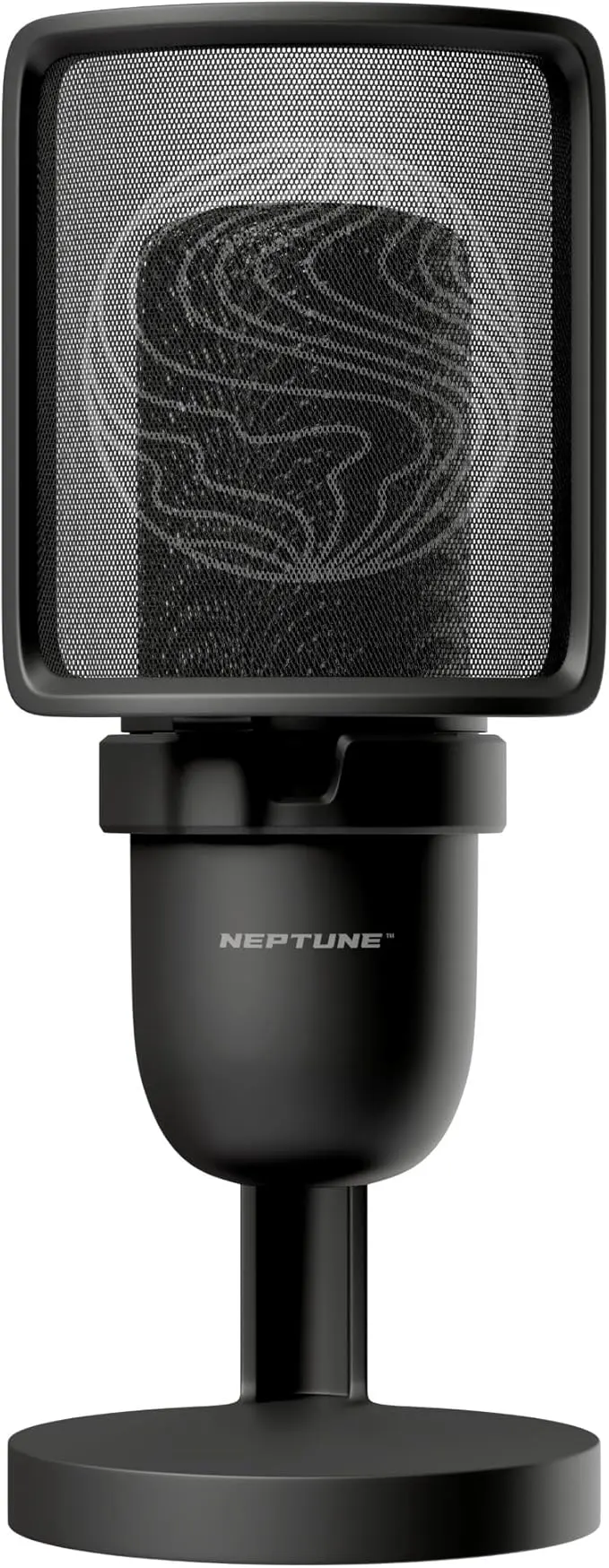
The Neptune Sonus markets itself on high‑resolution audio with a 192kHz sample rate, 24‑bit depth, and a 20Hz–20kHz frequency response paired with a 16mm cardioid capsule. A detachable USB‑C cable and touch‑sensitive mute button with LED indicator are genuine practical advantages over the TONOR. The included pop filter and broad platform compatibility — PC, Mac, PlayStation, and Xbox — round out an appealing spec sheet.
- 2
Quality control concerns and inconsistent audio performance
Despite the attractive feature set, user feedback points to inconsistent audio quality and reliability concerns. Some users report muffled or unclear sound, occasional static noise, and unstable USB connectivity during longer sessions. The microphone also lacks onboard controls such as gain adjustment and headphone monitoring, limiting quick hardware-side tuning. While the advertised feature list looks competitive, the overall real-world experience appears less consistent than more established entry-level alternatives.
Pros and Cons: NEPTUNE Sonus
Pros
192kHz/24‑bit high‑resolution audio support
Detachable USB Type‑C cable
Touch‑sensitive mute button with LED indicator
Broad compatibility: PC, Mac, PlayStation, Xbox
Cons
Widespread user reports of static, radio noise, and underwater sound
Advertised noise cancelling not confirmed on product packaging
Manufacturer omits sensitivity, SPL, and SNR specifications
Heaviest of the three at 508g — desktop stand may feel unstable without a proper arm
Conclusion
The Neptune Sonus boasts 192kHz/24‑bit audio on paper, but widespread user reports of static, disconnections, and underwater‑like audio make it the hardest to recommend.TONOR TC-777: The proven budget workhorse — imperfect but trustworthy
* As an Amazon Associate I earn from qualifying purchases.
- 1
Excellent vocal clarity backed by years of positive reviews
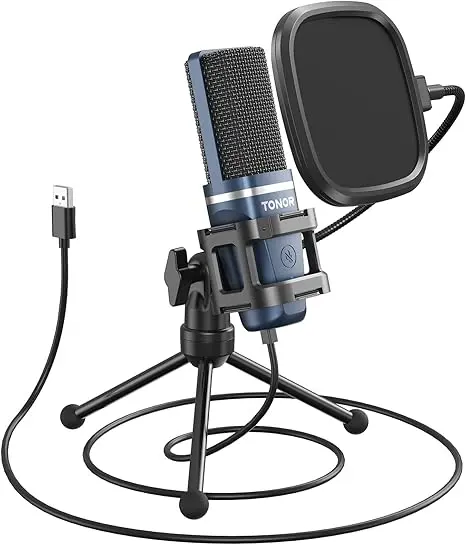
The TONOR TC‑777 is the most established microphone in this comparison. The cardioid condenser capsule produces clear, crisp voice capture that is noticeably better than built‑in headset or webcam microphones. Multiple long‑term owners confirm the mic has survived years of daily use for gaming, Discord, and streaming. The metal frame and included shock mount provide build quality rarely seen at this price.
- 2
Known weaknesses: background hiss, no physical controls, fixed cable
The TC‑777 is not without flaws. A recurring theme in reviews is a persistent low‑level white noise or hiss in the background. Others report that the recording volume is low and that you must speak close to the mic for decent levels. There is no physical mute button, no gain control knob, and no headphone monitoring jack — all adjustments must be made in software. The 1.9m USB cable is fixed, meaning a frayed cable kills the entire unit. For pure voice comms and casual streaming where you set the gain once and forget it, the TC‑777 remains the safest, most predictable choice. Its narrower 100Hz–16kHz frequency range is a real spec disadvantage against the 20Hz–20kHz competitors, but for voice-only comms the practical difference is minimal compared to the reliability gap.
Pros and Cons: TONOR TC-777
Pros
Proven voice clarity from tens of thousands of reviews
Complete accessory kit: stand, shock mount, pop filter, windscreen
Durable metal frame and solid build quality
Cardioid pattern effectively suppresses background noise
Cons
No physical mute button, gain knob, or headphone jack
Fixed USB cable — not detachable or replaceable
Low recording volume — requires close proximity to mic
Narrower frequency response (100Hz–16kHz) vs 20Hz–20kHz on both competitors — slightly thinner on deeper voices
Conclusion
The TONOR TC‑777 has years of positive reviews confirming its voice clarity, but its lack of physical controls and persistent white noise hold it back. Best for users who want a zero‑risk, proven microphone and don't need on‑device adjustments.LRUFOB MU5000: Feature‑packed contender with a critical quality flaw
* As an Amazon Associate I earn from qualifying purchases.
- 1
The most complete feature set: DSP noise cancellation, monitoring, physical controls, RGB
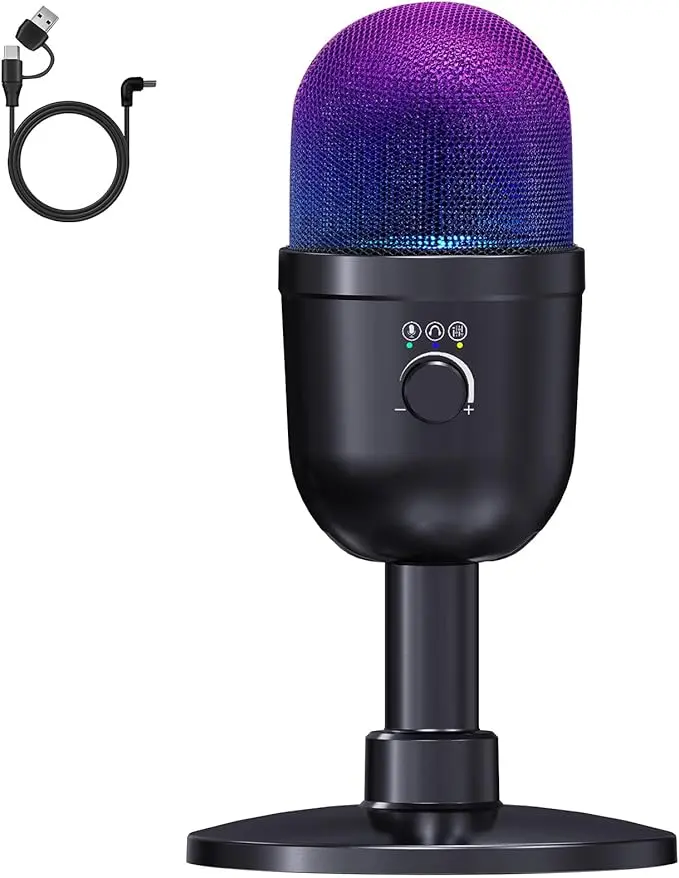
The LRUFOB MU5000 is the most feature‑rich microphone in this comparison. Its 16mm cardioid condenser capsule outputs at 192kHz/24‑bit. A multi‑mode DSP controller cycles through Noise Cancellation, Echo Mode, Noise Cancellation + Echo, and Mute via a single transparent touch button. Dual physical volume knobs control microphone gain and headphone output independently. A 3.5mm real‑time monitoring jack lets you hear yourself without latency. A braided detachable USB‑C cable and dynamic RGB lighting with eight modes complete a package that reads like a mic from a higher price category. Positive reviews confirm the sound can be very clear and professional.
- 2
Quality control concerns and reliability variability
Some users report inconsistencies in build quality and long-term reliability. Issues mentioned include occasional audio dropouts, fluctuating volume levels, and units arriving with missing or non-functional hardware controls. While the MU5000 offers a more advanced feature set compared to simpler models, user experience can vary between units. It performs well when functioning correctly, but quality control appears less consistent, making it important to test the device early after purchase.
Pros and Cons: LRUFOB MU5000
Pros
Multi‑mode DSP: noise cancellation, echo, combined, mute
3.5mm headphone jack with real‑time monitoring
Dual physical volume knobs — mic gain + headphones
192kHz/24‑bit with detachable braided USB‑C cable and RGB
Cons
Microphone intermittently cutting out and reducing volume
No shock mount or pop filter included
Conclusion
The LRUFOB MU5000 offers the most advanced feature set — including DSP processing, real-time monitoring, physical control knobs, and RGB lighting — but reported inconsistencies in build quality mean user experience can vary between units.Verdict
A clear balance between performance, features, and reliability TONOR TC-777
After comparing expert reviews, manufacturer specifications, and a wide range of user feedback across different markets, the TONOR TC-777 emerges as the most sensible recommendation for competitive CS2 and Valorant players on a tight budget.
It is not the most feature-rich microphone, and it is not without flaws — the persistent low-level background noise and lack of onboard physical controls are real drawbacks. However, it stands out for its consistency and long-term reliability in entry-level use, with fewer reports of major hardware issues or instability compared to other budget options in this category.
The included accessories such as the shock mount, pop filter, windscreen, and tripod stand make it a complete starter kit that provides strong overall value at its price point.
Why the others fell short:
-
LRUFOB MU5000 is the most ambitious model in this comparison, offering a strong feature set including multi-mode noise reduction, real-time headphone monitoring, dual physical controls, a detachable USB-C cable, and RGB lighting. On paper, it competes with much more expensive microphones, and when fully functional it can deliver clear and detailed voice capture. However, user feedback suggests inconsistencies in build reliability, with reports of occasional connectivity issues, fluctuating audio levels, and variability between units. As a result, while its feature set is impressive, overall consistency remains a concern.
-
Neptune Sonus prioritizes specifications and design over consistent real-world performance. Despite an attractive feature list including high-resolution audio support and a detachable USB-C connection, user feedback commonly points to issues such as background noise, unstable connection behavior, and inconsistent voice clarity. The lack of clearly documented core audio metrics also makes it harder to evaluate its real-world performance. Overall, it appears more promising on paper than in typical everyday use.
Frequently Asked Questions
If you use a gaming headset with a built‑in mic, you can absolutely communicate. But headset mics are notoriously compressed and pick up mouth‑breathing and cable noise. A dedicated cardioid condenser microphone on your desk will capture your voice more clearly, reject more background noise, and make you sound more authoritative in callouts. For streaming, a standalone mic is non‑negotiable — headset mics simply cannot match the clarity that viewers expect.
In practical terms for voice communication, almost none. Discord and in‑game voice chat compress audio to much lower bitrates anyway, so a 44.1kHz/16‑bit mic like the TONOR TC‑777 will sound nearly identical to a 192kHz/24‑bit mic in comms. 24‑bit matters more for music recording and post‑production flexibility. For pure CS2 and Valorant callouts, clean capture at 16‑bit is perfectly sufficient.
Cardioid mics pick up sound from the front and reject sound from the rear. This means your voice is captured clearly while your mechanical keyboard — which sits behind the mic — is naturally attenuated. All three microphones in this comparison use cardioid patterns, which is the correct choice for desktop gaming setups. Avoid omnidirectional mics for gaming; they pick up everything in the room equally.
The TONOR TC-777 is the safest and most predictable choice for pure voice communication. It has a long track record of consistent performance and delivers clear voice quality for gaming and voice chat. It also comes as a complete kit with all essential accessories included out of the box. While it lacks physical controls, this is not a major limitation for casual use — once the gain is set in software, it typically requires no further adjustment.
The LRUFOB MU5000 has the best feature set for streaming: real‑time headphone monitoring, multi‑mode DSP noise cancellation, physical gain and mute controls, and RGB lighting. When it works, the sound quality is genuinely impressive. However, you must buy it from a retailer with an easy return policy — documented quality control issues mean you may need to exchange the first unit. If you cannot risk receiving a defective product, the TONOR TC‑777 is the safer, albeit less feature‑rich, alternative.
The Neptune Sonus is difficult to recommend due to recurring user-reported inconsistencies in real-world performance. While its specifications appear competitive on paper, feedback commonly highlights issues such as background noise, unstable audio clarity, and occasional connectivity problems, as well as discrepancies between advertised and observed features. Overall, there are enough repeated concerns to suggest caution when considering it, especially compared to more consistent alternatives like the TONOR TC-777 (for reliability) and LRUFOB MU5000 (for feature set).
All condenser microphones are sensitive by nature and will pick up some keyboard noise. The cardioid pattern helps by rejecting sound from behind the mic, but it won't eliminate loud mechanical switches entirely. The LRUFOB MU5000 has the most effective noise reduction thanks to its dedicated DSP noise cancellation mode, but only if you receive a properly functioning unit. The TONOR TC‑777 relies solely on its cardioid pattern — using push‑to‑talk in Discord or enabling OBS noise suppression filters significantly reduces keyboard bleed. The Neptune Sonus's noise cancellation is not reliable based on user reports.
The Neptune Sonus explicitly lists PC, Mac, PlayStation, and Xbox compatibility. The TONOR TC‑777 and LRUFOB MU5000 are USB plug-and-play devices that work on any platform that supports USB audio — including PS4/PS5 and Xbox consoles — though console compatibility is not officially stated by their manufacturers. For guaranteed console support, the Neptune Sonus is the only confirmed option in this group.
You May Also Like
- Best Ultra-Budget Gaming Keyboards Under $20 for CS2 & Valorant (2026) — 4 Contenders, 1 Clear Winner
- Best Ultra-Budget Monitor Arms Under $20 for CS2 & Valorant (2026): Bracwiser vs HUANUO vs Utopia Home
- Best Ultra-Budget IEM Earbuds under $20 for CS2 & Valorant: KZ Taurus vs CCZ DC01 Pro vs Yeabomy AK3FILE
- Best Ultra-Budget USB-C to 3.5mm Audio Adapters Under $10 for CS2 & Valorant: UGREEN vs JXMOX vs JSAUX
- How to Hear Footsteps in CS2 & Valorant: Loudness Equalization + Audio Settings Guide