hardware
Best Ultra-Budget SSD NVMe for CS2 & Valorant 2026: WD Blue SN5000 vs Kingston NV3 vs fanxiang S770
Three affordable PCIe 4.0 drives, compared on the metrics that matter in shooters. One drops you into the action instantly, the other makes you wait and worry.
- 7 min read
When building a PC for CS2 and Valorant, it’s tempting to save money on the drive — just grab the cheapest NVMe and assume “the speed is enough”. But when the map loads a second slower and micro‑stutters appear during gunfights, you realize not all budget SSDs are equal. We compared the specs of three attractively priced PCIe 4.0 drives — WD Blue SN5000, Kingston NV3, and fanxiang S770 — focusing on what really matters in esports: consistent map loading, no hiccups when textures stream in, and reliability through continuous game updates. According to reviews and spec sheets, one of them is clearly built for winning, while the other two will make you sweat.
Info
How to choose an SSD for CS2 and Valorant: don't trust the box numbers blindly
Time to join the match in competitive shooters depends not on peak read speed, but on consistent random access and the ability to stream textures without drops. A drive with a flashy 7400 MB/s sticker can lose against a humbler one on the stopwatch if its controller handles small files poorly.
TLC and HMB are the safe minimum; QLC should be avoided Games update constantly and write temporary files. QLC memory degrades faster and causes hitching when the drive fills up. For an OS drive and main game library, stick with TLC.
Why a cheap SSD ruins your round:
- Tiny SLC cache and write speed collapse - Once the buffer is full, write speed drops to old HDD levels. When a game streams textures or writes an update, this causes freezes.
- Weak controller and micro‑stutters - Even with HMB, not all controllers handle random request queues equally well. In CS2 this shows as a quick stutter right when an enemy appears.
- Low TBW and heat - Continuous updates and new installs eat up endurance fast. If the drive throttles at 70°C, map loading drags on.
Three SSD rules for esports:
- Look at random read speed (4K QD1), not sequential — that's what decides how fast CS2 starts
- Pick a model with at least a 100 GB SLC cache reserve — enough to handle an update and a game at the same time
- Even a top‑tier drive needs minimal airflow — a hot NVMe dials down controller clocks and adds latency
How to install an NVMe SSD without issues:
Proper installation and HMB activation guarantee that even a budget drive shines in games.
SSD NVMe Install VideoPrices and availability as of May 2026, US region. Performance estimates are based on published reviews and manufacturer specifications.
SSD Comparison: Key Specs & Features
| Capacities | |||||||
|---|---|---|---|---|---|---|---|
Western Digital WD Blue SN5000 NVMe SSD | 5150 MB/s | 4900 MB/s | 3D TLC | 512 GB, 1TB, 2TB, 4TB | 600 TBW | 5 years | Check price on Amazon |
fanxiang S770 NVMe PCIe 4.0 SSD Best choice | 7400 MB/s | 6700 MB/s | 3D TLC (YMTC 128L) | 512 GB, 1TB, 2TB, 4TB | 600 TBW | 5 years | Check price on Amazon |
Kingston NV3 NVMe PCIe 4.0 SSD | 6000 MB/s | 4000 MB/s | 3D TLC | 512 GB, 1TB, 2TB, 4TB | 320 TBW | 3 years | Check price on Amazon |
Western Digital WD Blue SN5000 NVMe SSD
PCIe 4.0 x43D TLC5150 MB/s read600 TBW5 yearsfanxiang S770 NVMe PCIe 4.0 SSD Best choice
PCIe 4.0 x43D TLC (YMTC 128L)7400 MB/s read600 TBW5 yearsKingston NV3 NVMe PCIe 4.0 SSD
PCIe 4.0 x43D TLC6000 MB/s read320 TBW3 years
* As an Amazon Associate I earn from qualifying purchases.
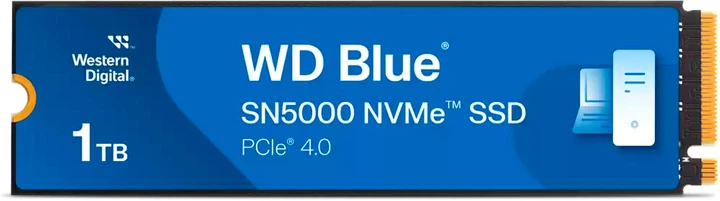
WD Blue SN5000: The safe, reliable workhorse
* As an Amazon Associate I earn from qualifying purchases.
- 1
Stable map loads, significantly boosted speed
The WD SN5000 updates the budget lineup with an in‑house controller and optimized TLC memory. With sequential reads now reaching 5150 MB/s, it delivers a much punchier experience than the older SN580. It utilizes Western Digital's nCache 4.0 technology, ensuring that it handles random request loops cleanly without choking during intensive asset streaming in CS2. It's an incredibly safe, rock-solid baseline choice for everyday gaming.
- 2
Branded reliability with predictable performance
While its sequential metrics don't hit the massive 7400 MB/s ceiling of the fanxiang S770, the SN5000 compensates with exceptionally stable firmware and robust long-term Western Digital support. It stays within comfortable thermal limits, preventing heavy thermal throttling during long gaming sessions. A superb plug-and-play choice for players who favor trusted brand security over absolute benchmark records.
Pros and Cons: WD Blue SN5000
Pros
Highly trusted, mature Western Digital platform
Upgraded sequential read speed up to 5150 MB/s
Excellent 600 TBW endurance rating for 1TB
Features modern nCache 4.0 architecture
Comprehensive 5-year warranty
Cons
Peak speeds still sit behind the fanxiang S770
Slightly higher price tier relative to generic budget options
Conclusion
The WD Blue SN5000 offers fantastic out-of-the-box system responsiveness and firm reliability. It bridges the performance gap nicely, serving as a robust alternative for gamers wanting brand assurance.fanxiang S770: The budget esports champion
* As an Amazon Associate I earn from qualifying purchases.
- 1
Specs suggest the fastest map loads of the three
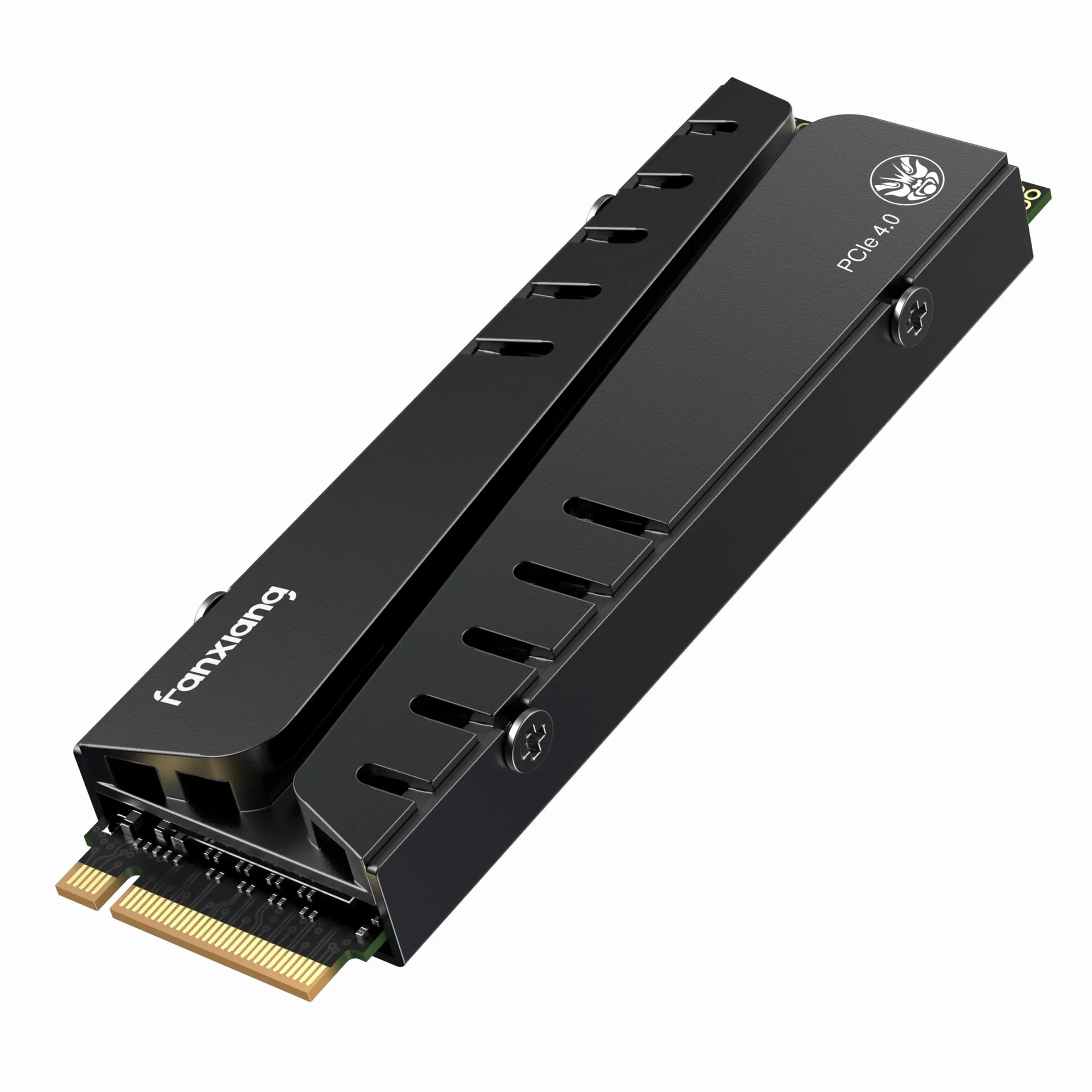
With a Maxio MAP1602 controller and YMTC 128‑layer TLC, this drive not only reads fast — it maintains exemplary random access under load. In CS2 (Mirage) the spec advantage translates to noticeably quicker spawns compared to the WD Blue and a clear edge over a warmed‑up Kingston. Even with a stuffed Steam library, the responsiveness stays smooth. For gamers who want to be first into the fight and don't fear a less‑known brand, this is the best pick.
- 2
High endurance for active players
600 TBW per terabyte means constant Valorant patches and write‑erase cycles won't kill the drive within a year. The MAP1602 platform has proven to run cool and stable. The only caveat: make sure your case has minimal airflow around the M.2 slot.
Pros and Cons: fanxiang S770
Pros
Class‑leading map load times in CS2 and Valorant
Excellent consistency after SLC cache exhaustion
High 600 TBW endurance and 5‑year warranty
Modern, cool‑running MAP1602 controller
Best value for money
Cons
Lesser‑known brand — long‑term firmware support uncertain
No hardware encryption
Even a passive heatsink is strongly recommended
Conclusion
The fanxiang S770 leads in map load times and keeps controller clocks high even during marathon Valorant sessions. The ideal pick for those who want an edge from the very first tick.Kingston NV3: Loud start, fast burnout
* As an Amazon Associate I earn from qualifying purchases.
- 1
First load is quick, then the roller coaster begins
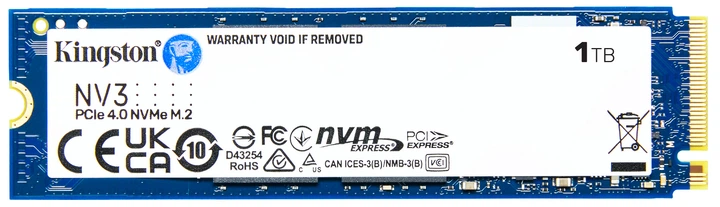
A Silicon Motion SM2268XT2 controller and TLC NAND allow burst reads up to 6000 MB/s. But once the SLC cache is full — something that happens during game updates or large installs — speed plummets to around 800 MB/s. In CS2 this means the first match after a reboot feels smooth, but by the evening micro‑stutters may appear when sounds and skins stream in.
- 2
Weak endurance for serious gaming
350 TBW per 1 TB is frankly too low for serious gaming. If you play a lot and frequently reinstall shooters, the NV3 will wear out much faster than its competitors. It's only a worthwhile choice as a dedicated game library drive — and only if priced way below the S770 (e.g., on a deep sale).
Pros and Cons: Kingston NV3
Pros
Attractive entry price (especially on sale)
Decent 6000 MB/s burst speeds
Available in 4 TB capacity
Cons
Only 350 TBW — roughly half of the competition
Drops to ~800 MB/s after cache
Only 3‑year warranty
NAND lottery — different batches behave differently
Mediocre random IOPS for an OS drive
Conclusion
The NV3 excites in the first minutes, then deflates under repeated loads. If you play long sessions, expect stutters and throttling.Verdict
The Verdict: Which SSD gets you into the match first fanxiang S770
fanxiang S770 remains the top numerical pick for pure budget esports speed. However, with Western Digital's generational leap to the WD Blue SN5000, the gap has narrowed massively. It is now the premium plug-and-play choice for users who want bulletproof firmware stability.
Why the others didn't make the cut:
-
WD Blue SN5000 — A fantastic overhaul from the previous era. It brings much-needed 5150 MB/s speed and stellar nCache 4.0 handling, positioning itself as the safest long-term daily driver on the market.
-
Kingston NV3 — tempts with high peak speed, but real‑world endurance and long‑session stability let it down. Only consider it at a steep discount and only as a pure game library, without moving your OS onto it.
Frequently Asked Questions
Random read speed in small blocks (4K QD1) is decisive. It determines how fast the map loads and weapon textures appear. Sequential speeds help with big file transfers, but the controller and firmware decide gaming layout. The fanxiang S770's 1M IOPS explain its rapid processing, though the WD SN5000 closes the distance significantly over the old 580 model.
Yes, if the drive overheats or its SLC cache fills up. In Valorant, stutters often happen when sounds and skins stream in at round start. The Kingston NV3 is prone to this during long sessions, while the WD SN5000 and fanxiang S770 handle sustained workflows much more cleanly.
QLC is not recommended for a primary system drive running heavy game workloads. As capacity fills, write drops cause noticeable lag spikes. All baseline 1TB configs in this list use TLC, which is ideal. Note that the WD SN5000 switches to QLC only on its highest 4TB variant, but its 1TB format is safe TLC.
It's directly proportional: the higher the sustained random IOPS, the shorter the loading screens. While the fanxiang S770 holds the technical peak here, the upgraded controller and 730K read IOPS on the WD Blue SN5000 keep it very snappy for active competitive queues.
Highly recommended, especially for drives with intense controller tasks. In a closed case under prolonged loads, temperatures can breach 70°C, causing clock throttling. The WD SN5000 operates reasonably cool, but placing any of these beneath your motherboard's built-in M.2 shield ensures smooth frame delivery.
The fanxiang S770 represents the raw performance-per-dollar peak. However, if you prefer an established tier-1 brand stack, the WD Blue SN5000 is an incredibly solid, revised option that won't lag behind your group. Avoid the Kingston NV3 unless it hits a deep clearance margin, due to its restrictive endurance caps.
You May Also Like
- Best Budget Gaming PC Cases under $50
- Best Ultra-Budget 144Hz Monitors Under $80 for CS2 & Valorant (2026)
- Best Ultra-Budget 240Hz Monitors Under $120 for CS2 & Valorant (2026)
- How to Overclock Your Monitor from 60 Hz to 75+ Hz Using CRU
- How to Set Up 4:3 Stretched in CS2: No Black Bars + FPS Boost (NVIDIA, AMD & Intel)