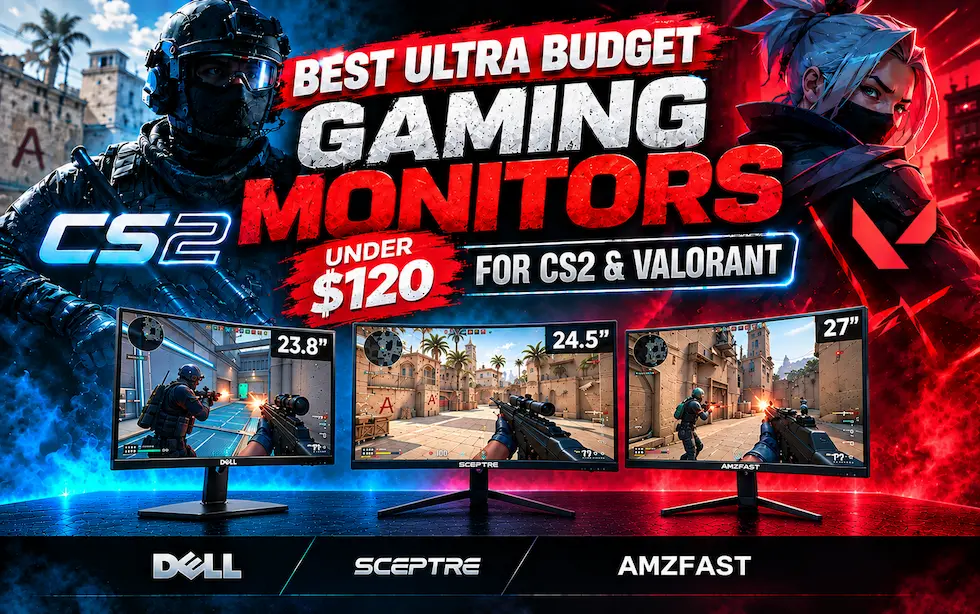
Best Ultra-Budget 240Hz Monitors Under $120 for CS2 & Valorant (2026)
Three 240Hz monitors under $120 compared for CS2 and Valorant: Fast IPS vs VA, response times, input ports, and practical trade-offs.
Andrew T. - Setup Specialist
Three 240Hz monitors under $120 compared for CS2 and Valorant: Fast IPS vs VA, response times, input ports, and practical trade-offs.
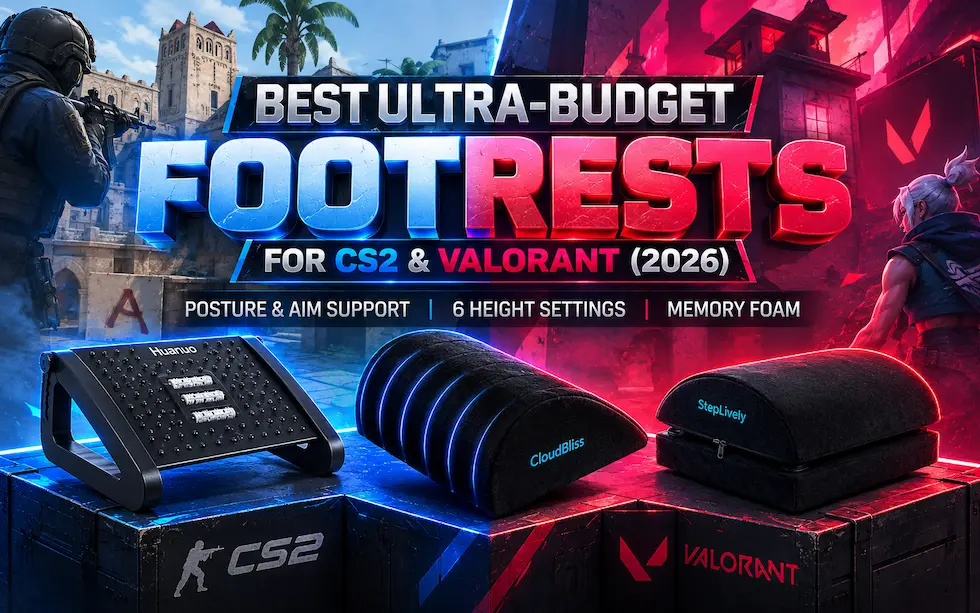
Three ultra-budget under-desk footrests compared for CS2 and Valorant players: CasaZenith, CloudBliss and StepLively.

Three ultra-budget 144Hz gaming monitors under $80 compared for CS2 and Valorant: panel type, pixel density, input ports and motion clarity limits.
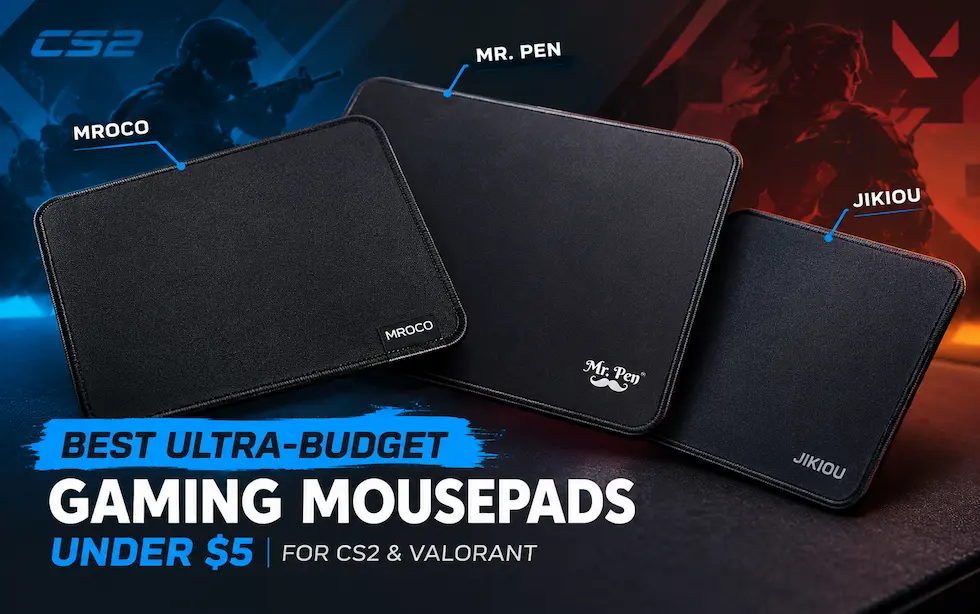
Can a $5 mousepad actually work for CS2 and Valorant? We compared the dimensions, edge construction, and calculated eDPI thresholds of MROCO, Mr. Pen, and JIKIOU.
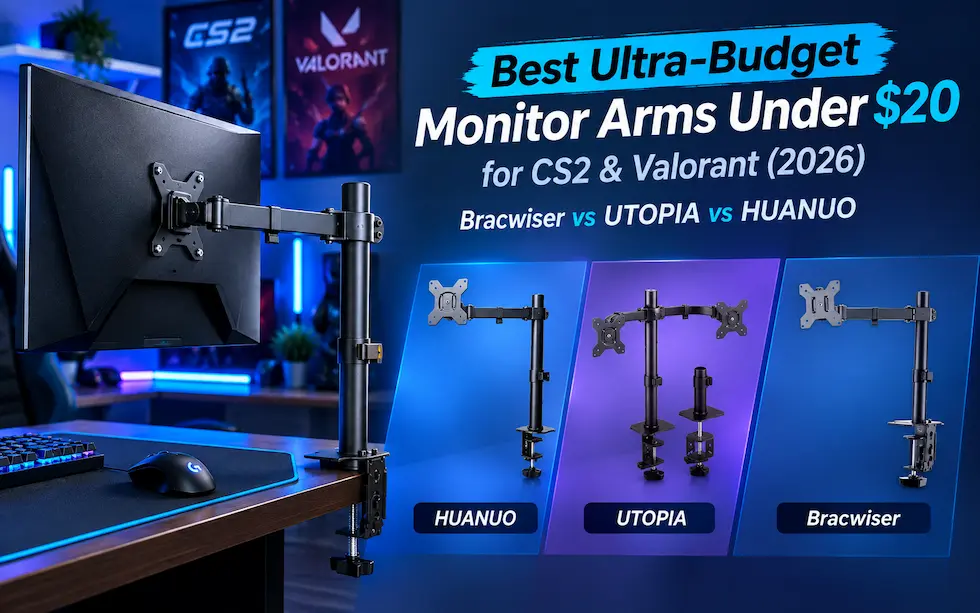
Free up mousepad space with the best ultra-budget monitor arms under $20 for CS2 and Valorant. Detailed comparison of Bracwiser, HUANUO, and Utopia Home.
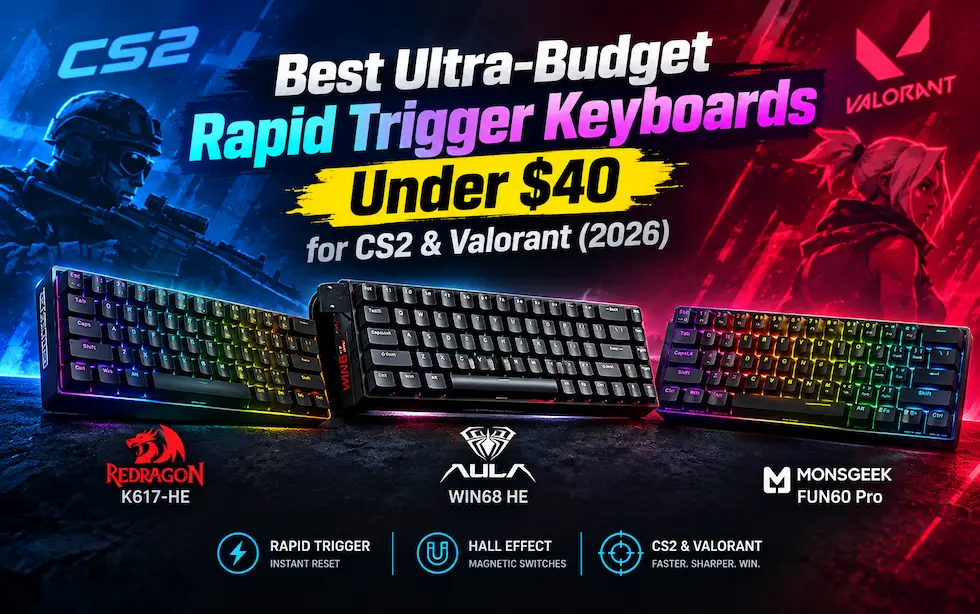
Three ultra-budget Rapid Trigger Hall Effect gaming keyboards under $40 compared — Redragon K617-HE, AULA WIN68 HE, and MonsGeek FUN60 Pro for CS2 and Valorant in 2026.
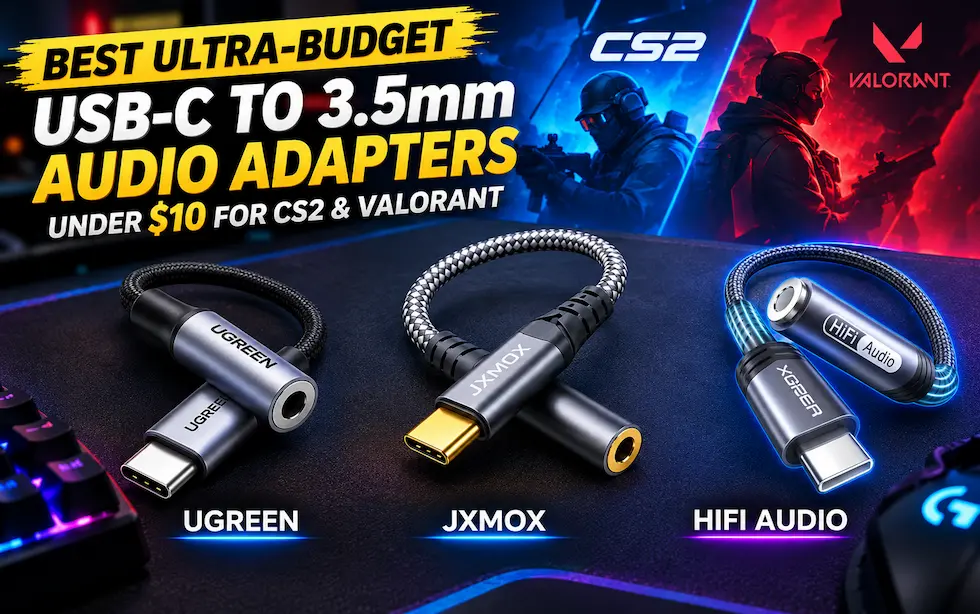
We compare the best ultra-budget USB-C to 3.5mm audio adapters under $10 for CS2 and Valorant. Clean up motherboard hiss and get sharp footstep audio with UGREEN, JXMOX, and JSAUX.
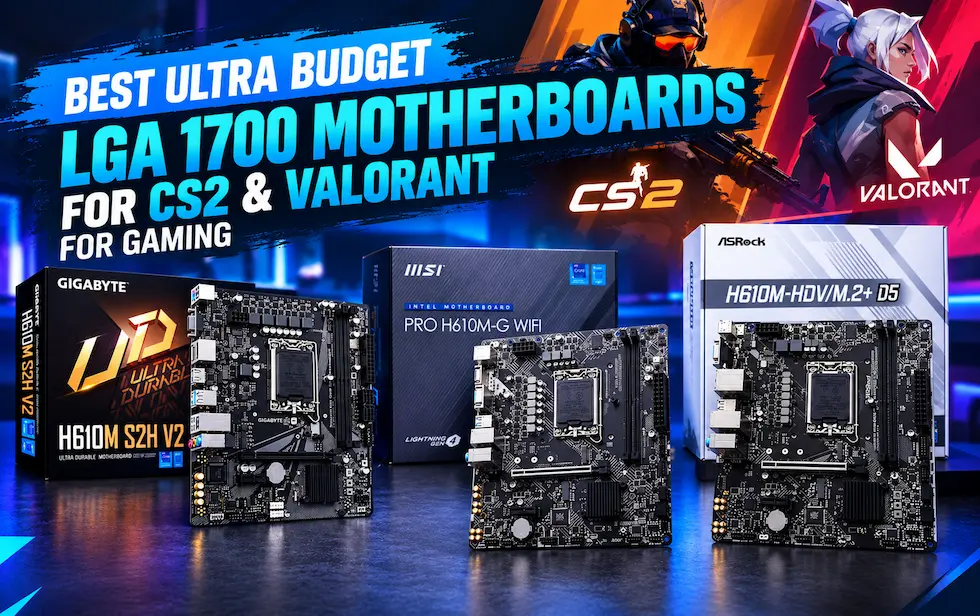
Compare top ultra-budget LGA1700 motherboards for CS2 and Valorant. ASRock, GIGABYTE, and MSI H610 tested for VRMs and gaming value.
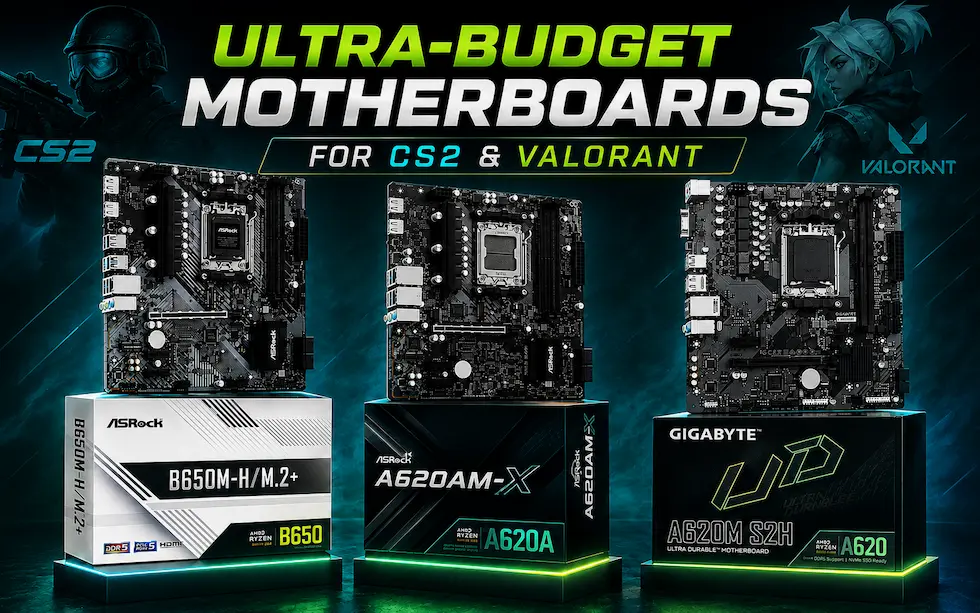
We compare the ASRock B650M-H, GIGABYTE A620M S2H, and A620AM-X: A620 vs B650 VRM limits, DDR5-6000 EXPO stability, and esports value.
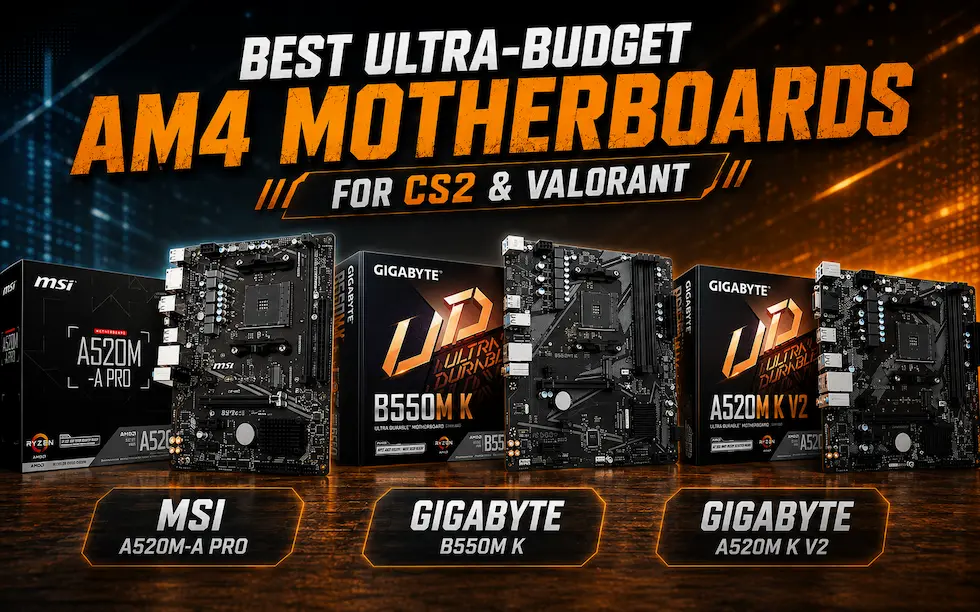
We compare the MSI A520M-A PRO, GIGABYTE A520M K V2, and B550M K: VRM thermal limits, PCIe 4.0 lane speeds, RAM topology, and competitive esports value.
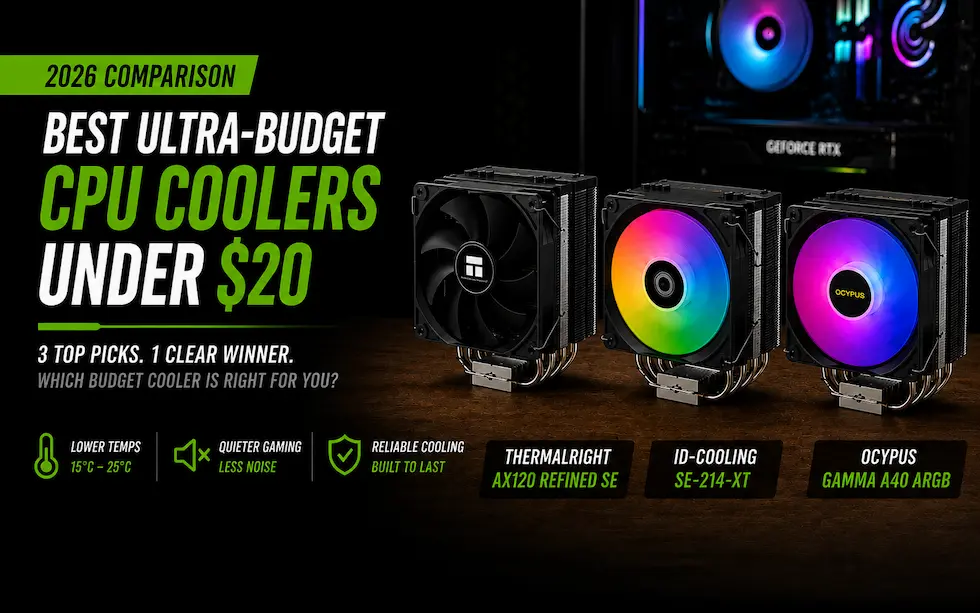
Compare the 3 best budget CPU air coolers under $20. Spec-driven thermal comparison, noise levels, RAM clearance, and cooling capabilities.

Compare three ultra-budget in-ear monitors (IEMs) for competitive FPS: horizontal dual drivers, precise directional footstep imaging, and unshakeable long-session comfort under $20.
Our hardware reviews and comparisons are entirely spec-driven and data-backed. We don't run a commercial testing lab; instead, we analyze manufacturer specifications—like sensor IPS, switch lifecycles, and PSU rail amperage—and cross-reference them with independent test data and long-term community feedback. Every product is evaluated on how well its technical specs translate to real-world performance and lower latency in competitive titles like CS2 and Valorant.
We maintain absolute editorial independence. GearRank features no sponsored picks, and we don't accept brand payouts to change our rankings in our hardware comparisons or PC build guides. Our recommendations rely on objective data analysis, hardware forum consensus, and verified user experiences. We always make a clear call and name a definitive winner based on the evidence, focusing on saving you money without sacrificing performance.
We track the budget gaming market across two main areas: PC Components (including value-focused GPUs, NVMe SSDs, airflow cases, comprehensive gaming build guides, and reliable power supplies) and Gaming Peripherals & Setup Gear (such as ultra-budget mice, keyboards, audio solutions, retro consoles, and essential gaming station equipment).